


Table of Contents
- How Material Properties Affect Your Hair During Sleep
- Hair Friction and Mechanical Damage: The Core Difference
- Silk vs Satin Pillowcase for Hair: What's the Real Distinction
- Best Pillowcase for Curly Hair and Textured Styles
- Silk Pillowcase Care and Washing: Maintenance That Protects Your Investment
- Cost, Durability, and Practical Considerations
- Making Your Choice: Which Material Fits Your Hair and Routine
- Frequently Asked Questions
Last Updated: October 17, 2026
How Material Properties Affect Your Hair During Sleep
When you lay your head on a pillow each night, the friction between your hair and the fabric creates stress on each strand. This is where the choice between silk vs cotton pillowcases matters most. The surface texture, absorbency, and smoothness of your pillowcase directly impact how much damage your hair sustains while you sleep.
Most people don't realize their pillow choice affects hair health as much as their shampoo does. The material properties of silk and cotton create very different environments for your hair overnight. One retains moisture; the other pulls it away. One creates friction; the other allows your hair to glide. Understanding these differences helps you make a choice that actually fits your hair type and sleep habits.
Fiber structure and surface smoothness
Silk fibers have a naturally smooth, round surface structure. Cotton fibers, by contrast, are flat and have a rougher texture under magnification. When your hair rubs against cotton throughout the night, those rough fibers catch and pull at your hair cuticle.
This difference in surface texture is the foundation of the entire silk versus cotton debate. Think of it like the difference between dragging your hand across sandpaper versus polished glass. One creates friction; the other doesn't. Your hair experiences this friction every single night, and over time, it adds up.
The fiber structure also affects how the fabric weaves together. Silk typically uses a tighter, more uniform weave that creates an even, smooth surface. Cotton weaves vary widely depending on quality. Lower-quality cotton has a looser weave with more texture.
Absorbency and moisture retention
Cotton is highly absorbent. It pulls moisture away from whatever touches it. When your hair sits on a cotton pillowcase, the fabric absorbs the natural oils from your scalp and hair shaft. This leaves your hair drier by morning.
Silk is hydrophobic, meaning it repels water and oils rather than absorbing them. Your hair's natural moisture and oils stay on the hair strand instead of being wicked away by the fabric.
The moisture retention difference becomes even more pronounced if you sleep with damp hair. Cotton will continue pulling moisture from your hair as it dries. Silk allows your hair to dry more naturally without the fabric competing for that moisture.
For curly and coily hair types, this moisture difference is critical. These hair textures rely on moisture to maintain their curl pattern and prevent frizz. Cotton's absorbency works against that.
Hair Friction and Mechanical Damage: The Core Difference
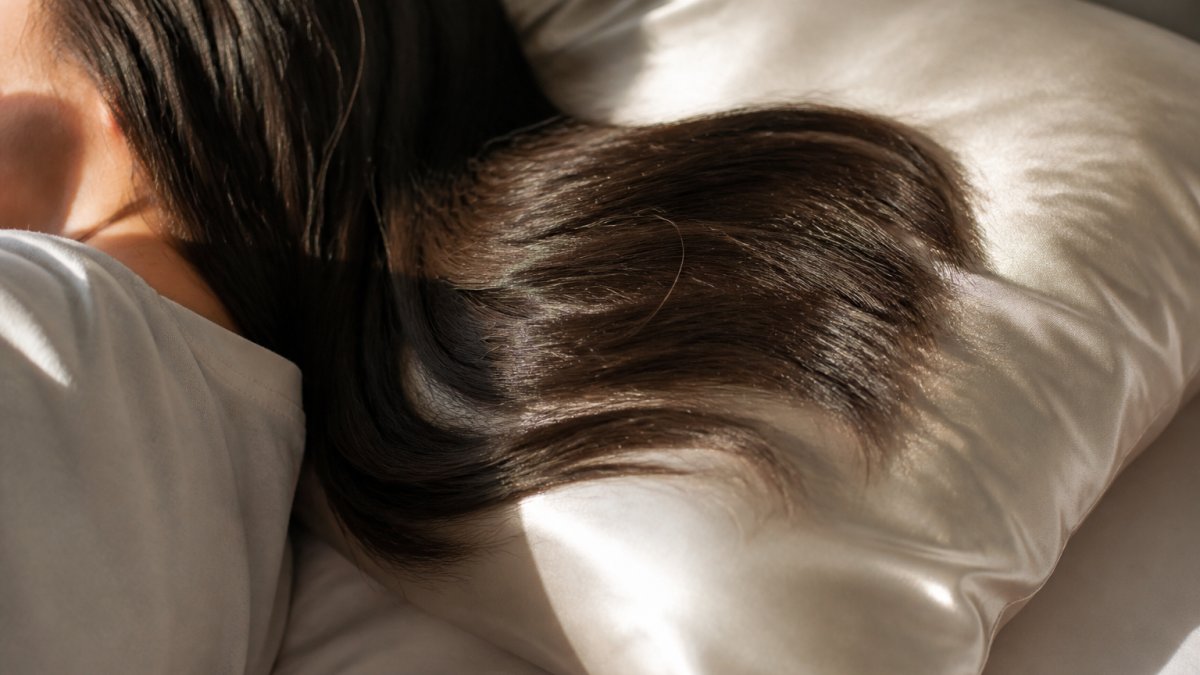
Hair friction is the mechanical stress created when your hair rubs repeatedly against a surface. Over hundreds of nights, this friction adds up.
Cotton creates more friction because of its rough fiber structure. Your hair catches on those fibers as you move during sleep. Silk creates less friction because your hair slides smoothly across it.
The mechanical damage from friction shows up as:
- Hair breakage near the ends and mid-shaft
- Split ends that spread up the hair strand
- Frizz caused by lifted cuticles
- Tangles that form from hair catching on fabric
- Bedhead that's harder to smooth out in the morning
Hair breakage happens when the stress on a single strand exceeds what that strand can handle. Friction alone won't break healthy hair in one night.
The amount of friction also depends on how much you move during sleep. People who toss and turn create more friction than people who stay still.
Silk vs Satin Pillowcase for Hair: What's the Real Distinction
Many people use the terms silk and satin interchangeably when talking about pillowcases. They're not the same thing, and the difference matters for your hair.
Silk is a natural protein fiber produced by silkworms. It has a naturally smooth surface and inherent properties that make it hydrophobic and low-friction. Genuine silk pillowcases come from this natural fiber.
Satin is a weave pattern, not a fiber type. Satin can be made from silk, polyester, nylon, or other materials.
For hair health, genuine silk outperforms satin alternatives. Here's why:
Genuine silk pillowcases:
- Naturally hydrophobic (repels water and oils)
- Smooth protein fiber structure
- Breathable and temperature-regulating
- Durable with proper care
- More expensive upfront
Satin pillowcases (polyester):
- Smooth surface from the weave pattern
- Still absorbs some moisture (less than cotton, more than silk)
- Can feel slippery but may not perform the same way
- More affordable
- Often more durable and easier to care for
If you're choosing between a cheap silk pillowcase and a high-quality satin one, the satin may actually perform better. The quality of the material and construction matters as much as the fiber type.
Check the label carefully. "Silk-like" or "satin" without the word silk usually means synthetic. Genuine silk pillowcases will say "100% silk" or list a specific silk type (mulberry silk, charmeuse silk).
Best Pillowcase for Curly Hair and Textured Styles
Curly and coily hair has different needs than straight hair. The curl pattern depends on moisture balance and minimal friction to maintain its shape. Cotton pillowcases work against both of these needs.
Why curly hair struggles with cotton:
- Cotton absorbs moisture that curls need to stay defined
- Friction causes frizz by lifting the hair cuticle
- Tangles form more easily when curls rub against rough fabric
- Bedhead is more pronounced because curls have lost their moisture and have been disrupted by friction
How silk helps curly and coily hair:
- Retains moisture so curls stay hydrated and defined
- Low friction means curls don't frizz or tangle as much
- Your curl pattern stays intact through the night
- Less breakage at the curl structure
- Frizz is reduced because cuticles aren't lifted by friction
For textured hair, a silk pillowcase is one of the most impactful overnight hair care choices you can make. Many people with curly hair report seeing curl definition improve within a week of switching to silk.
If silk is outside your budget, a high-quality satin pillowcase (even synthetic satin) will still be better than cotton for curly hair. The smooth surface still reduces friction, even if it doesn't retain moisture quite as well as genuine silk.
Some people with textured hair also use silk hair wraps or bonnets in addition to a silk pillowcase. This adds an extra layer of protection and moisture retention.
Silk Pillowcase Care and Washing: Maintenance That Protects Your Investment
Silk pillowcases require more careful maintenance than cotton. How you wash and store them determines how long they last and how well they perform.
Washing silk pillowcases:
- Hand wash in cool water with gentle detergent
- Never use hot water (it damages silk fibers)
- Avoid bleach and harsh chemicals
- Use a mesh laundry bag if machine washing on delicate cycle
- Rinse thoroughly to remove all soap
- Don't wring or twist (squeeze gently instead)
Drying silk pillowcases:
- Air dry flat or hung on a line
- Never use a dryer (heat damages silk)
- Avoid direct sunlight (can fade the color)
- Iron on low heat if needed (use a pressing cloth)
Storage and care:
- Store in a cool, dry place away from direct sunlight
- Avoid folding the same way repeatedly (creates creases)
- Keep away from rough surfaces that could snag the fabric
- Wash every 1-2 weeks (silk doesn't need frequent washing like cotton)
The maintenance difference between silk and cotton is real. Silk requires more attention. If you're not willing to hand wash or use a delicate cycle, a high-quality satin pillowcase might be more practical for your routine, even if it doesn't perform quite as well for hair health.
Proper care extends the life of your silk pillowcase significantly. A well-maintained silk pillowcase can last 3-5 years or longer. Neglected silk may start showing wear within a year.
Cost, Durability, and Practical Considerations
The price difference between silk and cotton pillowcases is substantial. Genuine silk pillowcases cost significantly more than cotton or polyester satin. Whether that investment makes sense depends on your hair type, budget, and commitment to proper care.
Durability comparison:
- Cotton pillowcases: Very durable, last years with standard washing, affordable to replace
- Satin (polyester) pillowcases: Durable, easy care, mid-range price
- Silk pillowcases: Delicate, require careful handling, highest upfront cost but long-lasting with proper care
The real question is whether the hair health benefits justify the higher cost and maintenance demands. For people with curly hair, chemically treated hair, or very dry hair, the answer is often yes.
Our approach focuses on what actually matters for your specific hair type and sleep habits, not on chasing the most expensive option.
Cost-benefit breakdown:
- Budget option: Cotton pillowcase (low cost, lower hair benefit, easy care)
- Mid-range option: Polyester satin pillowcase (moderate cost, good hair benefit, easy care)
- Premium option: Genuine silk pillowcase (high cost, best hair benefit, requires careful care)
Consider how long you'll actually use the pillowcase and how much you prioritize overnight hair care. If you're buying a pillowcase you'll replace in six months anyway, investing in expensive silk doesn't make sense.
Making Your Choice: Which Material Fits Your Hair and Routine
The best pillowcase for you depends on three factors: your hair type, your budget, and your willingness to maintain the fabric.
Choose silk if you have:
- Curly or coily hair that needs moisture and low friction
- Dry, brittle, or chemically treated hair
- A history of breakage or split ends
- The budget for a higher upfront cost
- The commitment to hand wash or delicate care
Choose satin if you have:
- Straight or wavy hair in good condition
- A tighter budget
- A preference for easy, low-maintenance care
- Still want some friction reduction and moisture benefits
Stick with cotton only if you have:
- Very resilient, healthy hair
- No concerns about frizz or tangles
- A strong preference for affordable, easy-care fabrics
- No history of breakage
The material properties of your pillowcase do affect your hair. Silk reduces friction and retains moisture better than cotton. These are physical facts, not marketing claims. But the size of that benefit depends on your specific hair type and condition.
Don't feel pressured to buy silk just because it's presented as the "better" option. A good satin pillowcase will deliver real benefits for most people. The key is choosing something smoother and less absorbent than standard cotton.
Whatever you choose, consistency matters more than perfection. Using the same pillowcase type consistently for 4-6 weeks lets you actually see the difference in your hair. One night on silk won't transform your hair. But months of reduced friction and better moisture retention will.
Frequently Asked Questions
Is silk or cotton better for hair?
Silk creates less friction against hair strands due to its smooth fiber structure, reducing breakage and frizz during sleep. Cotton is more absorbent and rougher, which can increase friction and moisture loss. For most people, silk offers better hair health benefits, but cotton remains a reasonable option if budget or care requirements are concerns. The difference is most noticeable for fine, curly, or chemically treated hair.
Is satin as good as silk for hair?
Satin and silk both have smooth surfaces that reduce friction, but they differ fundamentally. Silk is a protein fiber with natural properties that support moisture retention and reduce static. Satin is typically a cotton or polyester weave designed to mimic smoothness. Satin can work for hair, especially budget-conscious choices, but silk generally performs better for long-term hair health because of its inherent fiber properties.
Which pillowcase is best for curly or textured hair?
Silk pillowcases are ideal for curly and coily hair because they minimize friction that disrupts curl patterns and causes frizz. The smooth surface allows curls to move freely without catching on rough fibers. Cotton pillowcases can disrupt curl definition overnight. If you have curly hair and sleep on cotton, you'll likely experience more tangles, frizz, and loss of curl shape by morning.
How often should you wash a silk pillowcase?
Wash silk pillowcases every 1-2 weeks with cool water on a gentle cycle or by hand. Use mild detergent and avoid bleach, fabric softener, and high heat. Air-dry flat or hang-dry to prevent damage. Regular washing maintains hygiene and prevents product buildup, but overwashing or harsh treatment can reduce silk's lifespan. Cotton pillowcases tolerate more frequent washing at higher temperatures without damage.
Hair health during sleep comes down to friction and moisture. At S&Y company, we believe the right pillowcase choice should match your hair type and your lifestyle. Whether you choose silk for its superior performance or satin for its practicality, the move away from cotton alone makes a real difference. Explore our collection of home essentials designed to support your self-care routine, and find the pillowcase that fits both your hair needs and your comfort standards.