


Table of Contents
- How to Identify Combination Skin
- Building Your Combination Skin Care Routine
- Best Moisturizer for Combination Skin
- Combination Skin Exfoliation: Finding the Right Balance
- Managing Oily and Dry Areas Separately
- Distinguishing Combination Skin From Dehydration and Sensitivity
- Seasonal and Climate Adjustments for Combination Skin
- Frequently Asked Questions
Last Updated: October 10, 2026
How to Identify Combination Skin
Combination skin is characterized by having both oily and dry areas on the face simultaneously, typically with an oily T-zone (forehead, nose, and chin) and drier cheeks, making skincare for combination skin types essential for addressing both zones effectively. This skin type requires a balanced approach because standard routines designed for purely oily or dry skin will either leave some areas feeling tight and uncomfortable or exacerbate shine and breakouts in others.

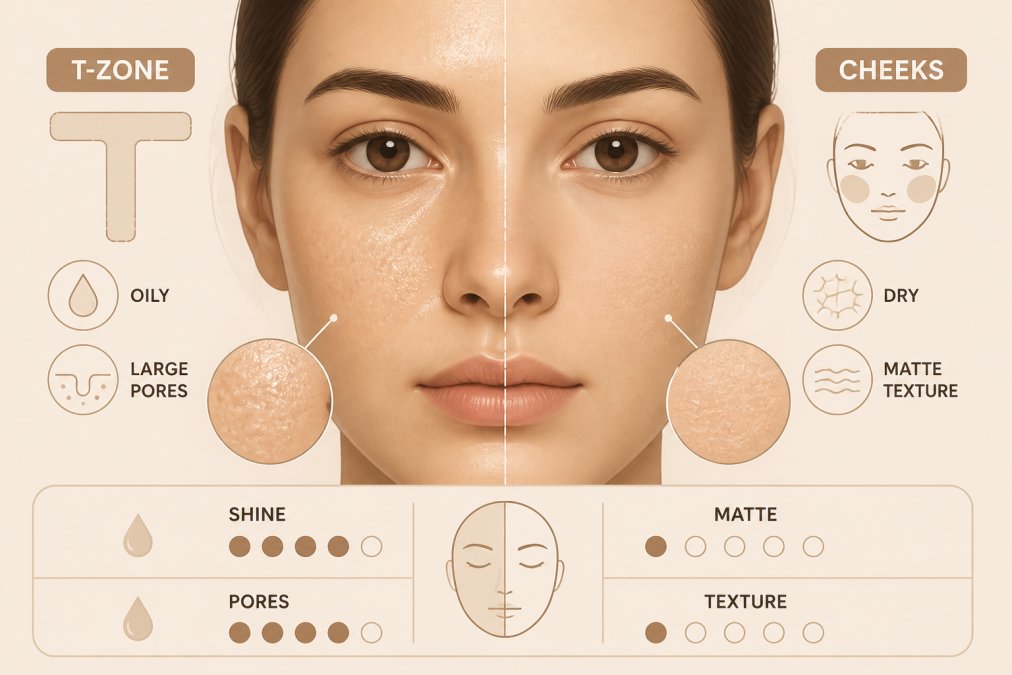
Identifying combination skin is straightforward. After cleansing your face, wait 30 minutes without applying any products. Look at your T-zone: does it appear shiny or feel greasy?
Your routine needs to address oil control in the T-zone without over-drying your cheeks, and hydrate dry areas without triggering breakouts in oily zones.
Building Your Combination Skin Care Routine
A solid foundation for skincare for combination skin types follows: cleanse, tone, treat, moisturize, and protect. Select products with textures and formulations that work across both zones without compromise.
Step 1: Cleanse Without Stripping
Start with a gentle cleanser that removes impurities and excess oil without disrupting your skin barrier. The Hyaluronic Acid Foaming Facial Cleanser works well for combination skin because its foaming texture lifts oil from the T-zone while hyaluronic acid prevents over-drying of the cheeks.

Apply to damp skin, massage gently for 30-45 seconds, then rinse thoroughly. Avoid scrubbing or washcloths. Cleanse twice daily: morning and night.
Step 2: Balance With Toning
A toner balances pH and refines pores. The Salicylic Acid Toner for Pore Minimizing targets the T-zone's excess oil and clogged pores without requiring separate toners for different areas. Apply with a cotton pad or fingertips after cleansing.
Start with two to three times weekly if sensitive, then increase to daily use as your skin adapts.
Step 3: Apply Targeted Serums
Serums deliver concentrated active ingredients. For combination skin, niacinamide regulates sebum production in oily areas while supporting the skin barrier in dry zones. The Ordinary Niacinamide is lightweight and layers easily.
Apply 2-3 drops to clean, dry skin after toning. The lightweight texture absorbs quickly without residue and works in both morning and evening routines.
Step 4: Moisturize Both Zones
A single heavy moisturizer will suffocate your T-zone, while a light gel might leave cheeks parched. Choose a formula with the right texture and weight.
Use lightweight, gel-based, or fluid moisturizers. If cheeks need extra moisture, apply the Hydrating Cream for Dry Skin to those areas only, avoiding the T-zone.
Step 5: Protect With Sunscreen
Use a lightweight, non-comedogenic sunscreen with at least SPF 30 daily, even on cloudy days (the WHO). UV exposure triggers more sebum production in oily areas and accelerates moisture loss in dry zones.
Apply sunscreen as the final step of your morning routine, about 15 minutes after your moisturizer. Reapply every two hours if you're spending extended time outdoors.
Best Moisturizer for Combination Skin
The best moisturizer for combination skin types balances hydration with lightweight texture.
Understanding Moisturizer Textures and Their Role
Moisturizers work through humectants (draw water in), emollients (soften and smooth), and occlusives (seal moisture).
Gel and fluid moisturizers rely on humectants like hyaluronic acid and glycerin.
Lightweight creams add emollients to the humectant base, providing more nourishment than gels while remaining non-comedogenic and hydrating cheeks without suffocating the T-zone.
Rich creams and oils contain high concentrations of emollients and occlusives.
Strategic Layering Across Zones
The most effective approach for combination skin is not finding a single "perfect" moisturizer, but rather layering strategically:
-
Apply a hydrating serum or essence first (while skin is still damp from toning). This step delivers water-binding ingredients to all zones without adding heaviness. Ingredients like hyaluronic acid, niacinamide, or glycerin work across both oily and dry areas.
-
Apply a lightweight gel or fluid moisturizer to your entire face. This locks in the serum's hydration and provides a baseline moisture layer. Because the texture is light, it won't congest your T-zone even with daily use.
-
Apply a richer cream only to dry zones (cheeks, temples, chin, around eyes) while the gel moisturizer is still slightly damp. The damp base helps the richer cream spread and absorb better, and you're using less product overall because you're not applying it to areas that don't need it.
This three-step approach addresses both zones' needs without compromise.
Ingredients to Prioritize
Hydrating humectants like hyaluronic acid and glycerin work across all zones, are lightweight, and support skin barrier function without adding shine.
Niacinamide regulates sebum production in oily areas while strengthening the skin barrier in dry zones.
Ceramides repair and maintain the skin barrier for dry zones without congesting the T-zone in lightweight formulas.
Ingredients and Textures to Avoid
Heavy silicones can trap bacteria and sebum in the T-zone's pores.
Mineral oils and petrolatum are highly occlusive.
Fragrance and essential oils can irritate both zones. Use fragrance-free formulas if cheeks are sensitive or T-zone is acne-prone.
Mattifying powders or silica over-dry dry zones while providing only temporary shine control.
Troubleshooting Common Moisturizer Problems
If your T-zone feels congested or breaks out, switch to a gel moisturizer on cheeks and dry areas only, or skip the T-zone if using hydrating serums.
If cheeks still feel dry, apply moisturizer to damp skin and consider layering a richer cream on dry areas while the first layer is still tacky.
If your entire face feels tight despite moisturizing, you may have dehydrated skin. Dehydrated skin improves with more frequent hydrating serum applications.
Application Timing and Frequency
Apply moisturizer within one minute of cleansing while skin is still damp. In the morning, wait 2-3 minutes before sunscreen. In the evening, apply and move to treatment serums unless actives require a wait time.
Moisturize twice daily, or apply only to dry zones in the morning and full-face at night if the T-zone becomes congested.
Combination Skin Exfoliation: Finding the Right Balance
Exfoliation removes dead skin cells and unclogs pores, but requires restraint. Over-exfoliating strips your barrier and triggers compensatory oil production.
Chemical exfoliants are gentler than physical scrubs. The Salicylic Acid Toner for Pore Minimizing serves double duty as toner and gentle exfoliant.

Limit exfoliation to two to three times weekly. If skin feels tight or irritated, reduce to once weekly or pause.
Managing Oily and Dry Areas Separately
You may need different approaches for different zones through strategic application and layering, not separate product lines.
For your T-zone: use full-strength actives and keep moisturizer minimal, or skip it if using hydrating serums.
For your cheeks: apply treatments gently or skip oil-control products, then layer moisturizer generously. Consider a richer cream if particularly dry.
Distinguishing Combination Skin From Dehydration and Sensitivity
Combination skin is frequently misdiagnosed as dehydrated or sensitive skin. Understanding the differences helps you choose the right products and routine adjustments.
Combination Skin: Structural Oil Distribution
True combination skin is characterized by genuinely different sebum production across zones due to different concentrations of sebaceous glands. This is a structural difference, not temporary.
Diagnostic signs of combination skin:
- T-zone appears shiny or greasy by midday
- Cheeks feel tight, look matte, or show visible dryness
- Contrast between zones is consistent
If this describes your skin, you have combination skin and should follow a zone-based routine as outlined in this guide.
Dehydrated Skin: Water-Barrier Dysfunction
Dehydrated skin lacks water content across the entire face. It's a temporary condition caused by barrier damage, not a skin type.
Diagnostic signs of dehydrated skin:
- Entire face feels tight or uncomfortable after cleansing
- Both zones feel uncomfortable, not just one
- Flaking, rough texture, or sensitivity across whole face
How to treat dehydrated skin: Pause all actives for 1-2 weeks. Use a hydrating cleanser, apply serum while damp, and follow with moisturizer.
If dehydrated and combination, once hydration improves, the oily-dry contrast becomes clearer and the T-zone normalizes.
Sensitive Skin: Reactivity and Inflammation
Sensitive skin is a condition characterized by a reactive, easily irritated barrier, not a skin type. You can have sensitive combination, dry, or oily skin.
Diagnostic signs of sensitive skin: reactions to many products with redness or stinging, reactions within minutes to hours, history of eczema or rosacea, reactions to fragrance or preservatives, or barrier feels compromised even when moisturized.
Important distinction: Dehydrated skin can feel reactive but improves with hydration alone. True sensitivity persists even when well-hydrated.
How to manage sensitive skin:
- Use fragrance-free products.
- Introduce one new product at a time, waiting 2 weeks between additions.
- Patch test on inner arm for 24-48 hours before full-face use.
- Avoid benzoyl peroxide, high-concentration salicylic acid, and strong retinoids.
- Keep your routine simple: cleanser, serum, moisturizer, sunscreen.
- If skin becomes red or reactive, pause actives for 1-2 weeks.
When to Seek Professional Guidance
If you've followed a combination skin routine for 4-6 weeks without improvement, consult a dermatologist. Conditions like rosacea or eczema can mimic combination skin symptoms.
A dermatologist can assess your skin barrier, identify any underlying conditions, and recommend treatments tailored to your specific needs rather than a general skin type.
Seasonal and Climate Adjustments for Combination Skin
Your routine may need seasonal adjustments.
Cold weather reduces oil production, making cheeks drier while the T-zone becomes less congested.
Adjust your routine seasonally. In winter, use the Hydrating Cream for Dry Skin on cheeks.
| Season | T-Zone Focus | Cheeks Focus | Product Adjustments |
|---|---|---|---|
| Summer | Oil control, pore clarity | Light hydration | Lightweight moisturizer, increase toner frequency |
| Winter | Maintain balance | Extra hydration | Richer cream, reduce exfoliation |
| Spring/Fall | Moderate oil control | Moderate hydration | Standard routine, monitor for changes |
Building an effective skincare routine for combination skin types requires patience and willingness to adjust.
Frequently Asked Questions
How do I know if I have combination skin?
Combination skin shows distinct characteristics across different zones. Your T-zone (forehead, nose, chin) appears oily, shiny, or prone to breakouts and clogged pores, while your cheeks feel dry, tight, or flaky. This pattern persists even after cleansing. To confirm, wash your face and wait two hours without applying products. Check if your T-zone feels greasy while your cheeks remain uncomfortable. This zone-based oil distribution is the defining feature of combination skin and separates it from other skin types.
What is the best moisturizer for combination skin?
The best moisturizer for combination skin uses a lightweight, gel-based, or fluid texture that hydrates without adding excess shine or heaviness. Look for formulas with hydrating ingredients that support your skin barrier without clogging pores. Hydrating Cream for Dry Skin (£91.21) works well for combination skin when applied sparingly to dry patches while avoiding the oily T-zone. Apply moisturizer to cheeks and dry areas after serums, then use a lighter hand on your forehead and nose. This targeted approach balances hydration across both zones without triggering excess sebum production.
Can combination skin be sensitive?
Yes, combination skin can absolutely be sensitive. Sensitivity and combination skin are separate characteristics that often overlap. You may have oily, breakout-prone areas alongside sensitive, reactive patches. If your skin shows irritation, redness, or stinging when using active ingredients like salicylic acid or azelaic acid, introduce them gradually and avoid layering multiple strong actives at once. Patch test new products on a small area first, especially if you're prone to irritation. A gentle cleanser and careful product selection help protect your skin barrier while managing both oiliness and sensitivity.
How often should I exfoliate combination skin?
Exfoliate combination skin 2-3 times per week using chemical exfoliants rather than physical scrubs. Chemical exfoliants like salicylic acid work gently on both oily and dry zones without physical trauma to the skin barrier. Use Salicylic Acid Toner for Pore Minimizing (£148.07) on oily areas to manage sebum and clogged pores, but avoid over-applying to dry cheeks. If your skin feels irritated or your barrier is compromised, reduce frequency to once weekly. Never combine multiple active exfoliants in the same routine, as this can trigger irritation and worsen both oily and dry patches.
How do I balance oily and dry skin in one routine?
Balance combination skin by layering lightweight, targeted products that address each zone's needs. Start with a gentle cleanser like Hyaluronic Acid Foaming Facial Cleanser (£70.71) that removes impurities without stripping. Follow with a toner to refine pores and balance pH. Apply serums strategically: use niacinamide on the T-zone to control oil and support skin tone, and azelaic acid where you have uneven texture or breakouts. Moisturize dry areas generously while using less on oily zones. This zone-based approach prevents over-treating either area and maintains a healthy skin barrier across your entire face.
What ingredients work best for combination skin?
Key ingredients for combination skin include niacinamide, which supports balanced oil production and skin tone; salicylic acid, which unclogs pores without harsh scrubbing; azelaic acid, which addresses uneven texture and breakouts; and hyaluronic acid, which hydrates without heaviness. The Ordinary Niacinamide (£9.99) is an affordable option for daily oil control, while The Ordinary Azelaic Acid Suspension (£14.00) targets breakouts and texture. Avoid heavy occlusive ingredients on your T-zone and harsh actives that strip your cheeks. Patch test any new ingredient on a small area first to ensure compatibility with both your oily and dry zones.
Should I use different products on oily and dry areas?
Yes, using different products on oily and dry areas is the most effective approach for combination skin. Your T-zone benefits from lightweight, oil-controlling formulas with ingredients like salicylic acid and niacinamide, while your cheeks need richer hydration and gentle treatment. Apply a pore-minimizing toner only to oily zones, reserve heavier moisturizers for dry patches, and use targeted serums where needed. This zone-based strategy respects your skin's different needs and prevents the over-treatment that occurs when using one routine across your entire face. Consistency with this approach leads to better balance and fewer breakouts or dry patches.