


Table of Contents
- Why Your Skincare Routine Changes as Skin Ages
- Morning Skincare Routine for Mature Skin
- Nighttime Skincare Routine for Mature Skin
- Retinol for Aging Skin: How to Use It Safely
- Key Ingredients That Address Wrinkles and Age Spots
- Tailoring Your Routine to Your Skin Type and Sensitivities
- When to Consult a Dermatologist
- Realistic Timelines and What to Expect
- Frequently Asked Questions
Last Updated: October 12, 2026
Why Your Skincare Routine Changes as Skin Ages
Your skin doesn't age uniformly. The changes that begin in your 30s accelerate in your 40s and beyond, requiring a fundamentally different approach to skincare.
The shift isn't about using more products, it's about using the right ones in the right order. Your skin barrier becomes more fragile (ncbi.nlm.nih.gov). Oil production drops. Cell turnover slows.
Understanding why your routine needs to change is the first step toward building one that delivers real results.
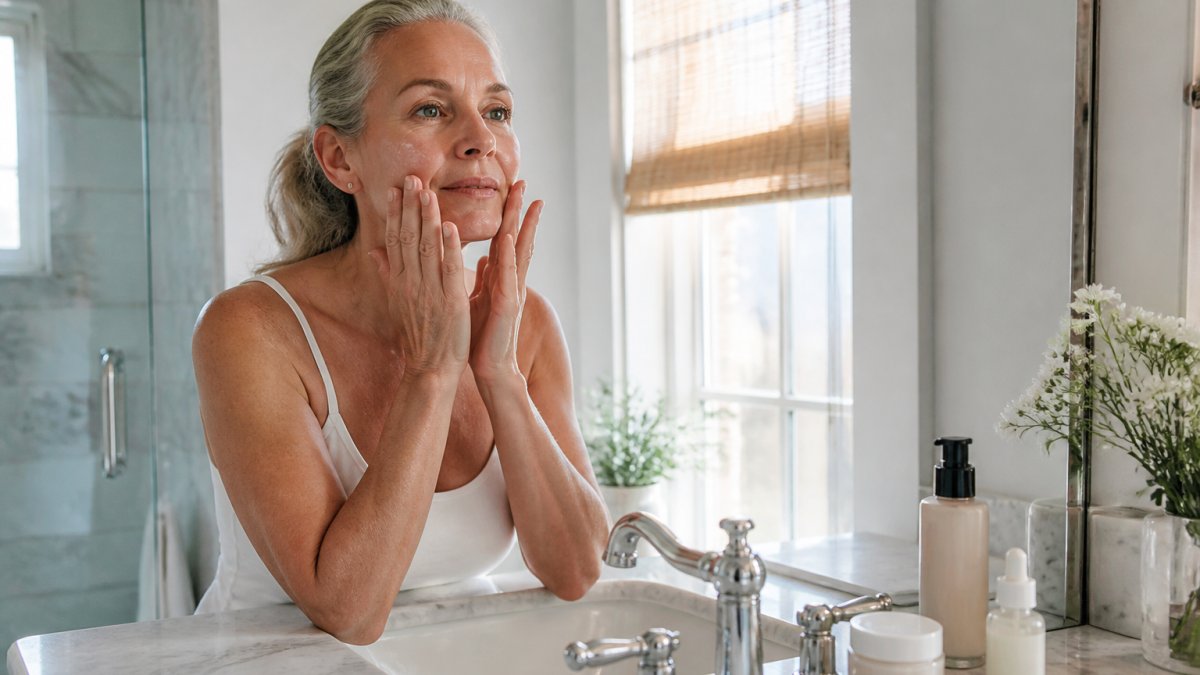
Morning Skincare Routine for Mature Skin
Your morning routine sets the tone for the day and protects your skin from environmental stressors. A morning skincare routine for mature skin should take 5-10 minutes and focus on gentle cleansing, lightweight treatment, hydration, and sun protection. These four steps work together to prepare aging skin for the day ahead.
Step 1: Gentle Cleanse
Start with a cleanser that removes overnight oil and buildup without stripping your skin. For aging skin, harsh cleansers damage the skin barrier and trigger irritation. Use lukewarm water and a gentle, non-foaming cleanser. Massage it in for 30 seconds, then rinse thoroughly.
Why gentle matters: Your skin barrier weakens with age. A harsh cleanser disrupts the lipid layer that holds moisture in and keeps irritants out. That barrier damage shows up as tightness, sensitivity, and accelerated aging. A gentle cleanser preserves it.
Step 2: Apply Treatment Serum
After cleansing, your skin is primed to absorb active ingredients. This is where treatment happens. A serum with hyaluronic acid, vitamin C, or peptides targets specific concerns, fine lines, dullness, loss of elasticity. Apply a few drops to slightly damp skin and press gently into your face and neck.
The Collagen & Retinol Toner Pads from S&Y company offer a convenient alternative if you prefer a pad format. These combine collagen and retinol in an easy-to-use format that simplifies your morning routine. Simply swipe across clean skin for a quick refresh.

Step 3: Moisturize and Hydrate
Hydration is non-negotiable for aging skin. A good moisturizer locks in the serum and prevents transepidermal water loss throughout the day. Look for moisturizers with ceramides, hyaluronic acid, or peptides. Apply to damp skin for better absorption.
The Ordinary Hyaluronic Acid ($13.37) works beautifully as a hydration layer before your moisturizer. Apply it to slightly damp skin, then follow with a richer cream. This layering technique is especially effective for mature skin that needs maximum moisture retention.
Step 4: Sunscreen for Aging Skin
Sun damage is the single largest contributor to visible aging. UV exposure breaks down collagen, triggers age spots, and deepens wrinkles. Use a broad-spectrum SPF 30 or higher every single day, even when it's cloudy. Apply it last, after your moisturizer has set.
Many people skip this step in the morning. Don't. Sun protection prevents future damage and stops existing age spots from darkening. It's the most effective anti-aging step you can take.
Nighttime Skincare Routine for Mature Skin
Your nighttime skincare routine for mature skin is where the heavy lifting happens. While you sleep, your skin's repair mechanisms activate. This is when you introduce stronger active ingredients like retinol, which would be too irritating during the day when your skin is exposed to sun and environmental stress.
Step 1: Cleanse Thoroughly
Remove makeup, sunscreen, and the day's accumulation of dirt and oil. Use the same gentle cleanser as your morning routine, but take your time. A thorough cleanse at night prevents clogged pores and allows your nighttime treatments to penetrate effectively.
Some people double-cleanse: first with an oil cleanser to dissolve makeup and sunscreen, then with a water-based cleanser. This is especially helpful if you wear heavy makeup or sunscreen. The first cleanse removes lipid-based products; the second removes water-soluble residue.
Step 2: Apply Active Treatments
This is when retinol, vitamin C serums, or peptide treatments go on. Active ingredients work best on clean, dry skin in the evening. Start with lower concentrations if you're new to actives, and introduce them slowly to avoid irritation.
Retinol is the gold standard for aging skin, but it requires careful introduction. Begin with a low concentration once or twice a week, then gradually increase frequency as your skin builds tolerance. This prevents the redness and flaking that scare people away from retinol.
Collagen & Retinol Toner Pads – Skincare →
Step 3: Restore Moisture
End your nighttime routine with a richer moisturizer or night cream. Your skin loses more water at night, and a heavier cream prevents that loss while supporting the skin barrier. The Hydrating Face Cream for Dry Skin ($91.21) is specifically formulated for mature skin that needs intensive moisture restoration.
For an occasional boost, use the Hydrating Korean Sheet Mask ($62.16) 1-2 times per week. Sheet masks deliver concentrated hydration and active ingredients in a single 15-20 minute treatment. They're especially helpful during winter or when your skin feels particularly dehydrated.

Retinol for Aging Skin: How to Use It Safely
Retinol is the most researched anti-aging ingredient available. It increases cell turnover, boosts collagen production, and visibly reduces wrinkles and age spots.
Start low and go slow. Begin with a low retinol concentration, used once or twice weekly.
Retinol causes temporary redness, flaking, and sensitivity. However, if you experience severe irritation or persistent redness that doesn't resolve, reduce frequency or concentration.
Never combine retinol with vitamin C, AHAs, BHAs, or benzoyl peroxide on the same night.
Retinol increases sun sensitivity. This is why you use it only at night and apply SPF 30+ every morning without fail.
Key Ingredients That Address Wrinkles and Age Spots
Not all skincare ingredients are equal. Some have strong evidence behind them; others are marketing hype.
Hyaluronic Acid holds up to 1000 times its weight in water. It works at any age but becomes essential for mature skin, which loses its natural ability to retain moisture. The Ordinary Hyaluronic Acid ($13.37) is an affordable, effective option.

Peptides signal your skin to produce more collagen. They're gentler than retinol and work well for sensitive skin.
Vitamin C brightens dull skin and fades age spots. It also supports collagen production. Use a stable form like L-ascorbic acid or ascorbyl palmitate.
Ceramides repair and strengthen your skin barrier. They're especially important for mature skin, which has a compromised barrier.
Niacinamide reduces redness, strengthens the skin barrier, and minimizes pore appearance. It's gentle enough for sensitive skin and plays well with other actives.
| Ingredient | Primary Benefit | Best For | Irritation Risk |
|---|---|---|---|
| Hyaluronic Acid | Hydration & plumping | All aging skin types | Very low |
| Retinol | Collagen boost & cell turnover | Wrinkles & age spots | High if misused |
| Peptides | Collagen signaling | Sensitive, mature skin | Very low |
| Vitamin C | Brightening & antioxidant | Age spots & dullness | Medium |
| Ceramides | Barrier repair | Dry, sensitive skin | Very low |
Tailoring Your Routine to Your Skin Type and Sensitivities
Aging affects all skin types, but the specific concerns vary. A 55-year-old with oily skin faces different challenges than one with dry skin.
Dry, Mature Skin: Focus on hydration and barrier support. Use a rich cleanser with oils or butters. Layer hydrating serums before your moisturizer.
Oily, Mature Skin: You still need sun protection and treatment serums, but skip heavy creams. Use a lightweight gel moisturizer.
Combination, Mature Skin: Apply different products to different zones. Use a richer moisturizer on dry areas and a lighter one on your T-zone.
Sensitive, Mature Skin: Introduce actives extremely slowly. Start with the gentlest options: peptides, niacinamide, and hyaluronic acid.
Collagen & Retinol Toner Pads – Skincare →
When to Consult a Dermatologist
A good skincare routine addresses most aging concerns. But some situations require professional care. Consult a dermatologist if you experience persistent redness, severe sensitivity, or a rash that doesn't improve after stopping new products.
Dermatologists can also prescribe stronger retinoids if over-the-counter retinol isn't delivering results after 3-4 months of consistent use. They can recommend professional treatments like chemical peels or laser therapy for stubborn wrinkles or age spots that topical products alone won't address.
If your skin barrier feels permanently compromised, persistent tightness, burning, or sensitivity that doesn't resolve, a dermatologist can assess whether you have a condition that requires prescription treatment.
Realistic Timelines and What to Expect
Skincare results take time.
Weeks 1-2: You'll notice improved hydration and a brighter complexion. Fine lines appear less pronounced because your skin is plumper.
Weeks 4-6: If you're using retinol or other actives, you'll see less redness and more even skin tone.
Weeks 8-12: Wrinkles become noticeably shallower. Age spots continue fading. Skin firmness improves as collagen production increases.
Months 4-6: Sustained improvement in all concerns. Fine lines are significantly reduced. Age spots are much lighter or gone.
6+ Months: Continued improvement with consistent use. Results plateau eventually, you're maintaining what you've achieved, not seeing dramatic new changes.
The timeline depends on consistency.
Frequently Asked Questions
What is a good skincare routine for aging skin?
A good skincare routine for aging skin includes four essential steps: gentle cleansing to remove impurities without stripping moisture, a treatment serum with active ingredients like retinol or vitamin C to address fine lines and spots, hydrating moisturizer to support the skin barrier, and broad-spectrum sunscreen (SPF 30+) to prevent further sun damage. The routine should be consistent, applied morning and evening, and adjusted based on your skin's response over time.
How should I introduce retinol for aging skin without causing irritation?
Start retinol for aging skin slowly by using it just 1-2 times per week initially, gradually increasing frequency as your skin builds tolerance. Begin with a lower concentration and apply a pea-sized amount to clean, completely dry skin, waiting 20 minutes before moisturizing. Avoid combining retinol with vitamin C, acids, or other actives on the same night. If redness or peeling occurs, reduce frequency or concentration. Sunscreen is essential during the day when using retinol, as it increases sun sensitivity.
What ingredients help reduce wrinkles and age spots?
Retinol and retinoids stimulate collagen and cell turnover to minimize fine lines. Vitamin C brightens and protects against oxidative damage. Hyaluronic acid hydrates the skin, making wrinkles appear less pronounced. Peptides support skin firmness and elasticity. Niacinamide strengthens the skin barrier and reduces irritation. For age spots, look for products with vitamin C, niacinamide, or gentle exfoliants. Consistency over 6-12 weeks typically shows visible results, though results vary by individual.
Should I use different products for my morning skincare routine for mature skin versus evening?
Yes. Your morning skincare routine for mature skin should focus on protection and hydration: gentle cleanser, lightweight serum, moisturizer, and sunscreen. Your evening routine can include stronger actives like retinol or exfoliants since skin repairs overnight and won't be exposed to UV. At night, cleanse thoroughly to remove makeup and daily buildup, apply active treatments, and use a richer moisturizer. This approach maximizes benefits while minimizing irritation.
How important is sunscreen for aging skin?
Sunscreen for aging skin is critical, it prevents further sun damage that accelerates wrinkles, age spots, and loss of elasticity. UV exposure breaks down collagen and elastin, undoing the benefits of your other skincare products. Use broad-spectrum SPF 30 or higher daily, even on cloudy days and indoors near windows. Reapply every 2 hours if outdoors. Consistent sun protection is one of the most effective anti-aging steps you can take, more important than most actives.
Can I use the same skincare routine if I have sensitive skin?
If you have sensitive skin, adjust your routine by choosing gentler formulations and introducing active ingredients slowly. Use a mild, fragrance-free cleanser, start with lower concentrations of actives like retinol, and patch-test new products on your inner arm first. Avoid multiple actives on the same night. Focus on barrier support with ceramides and hydration. If you experience persistent irritation, redness, or burning, consult a dermatologist, some skin conditions require professional guidance rather than over-the-counter adjustments.
When should I see a dermatologist about aging skin concerns?
Consult a dermatologist if you notice severe or sudden changes in skin texture, persistent redness or irritation despite routine adjustments, skin tags or growths, signs of skin cancer, or if your skin doesn't improve after 3 months of consistent care. A dermatologist can recommend prescription-strength treatments or professional procedures (laser, microneedling) that go beyond routine skincare.