


Last Updated: November 3, 2026
Quick Summary
To organize a small closet for seasonal clothes, measure the space first, edit your wardrobe into keep, donate, repair and store piles, then use vertical space and door storage. Swap seasons twice a year using breathable, labeled bins to keep the closet usable all year.
- Measure the width, depth, height, rod and shelf positions before buying any organizers.
- Sort every item into keep, donate, repair or store, working one category at a time.
- Use vertical space, the back of the door and a second hanging rail to add capacity.
- Clean and dry clothes completely before packing them into off-season storage.
- Label each bin with its season and contents, and use breathable bins rather than sealed plastic.
Table of Contents
- Measure and Map Your Small Closet Before You Buy Anything
- Edit Your Wardrobe: Keep, Donate, Repair or Store
- Use Vertical Space, Door Storage and a Second Hanging Rail
- DIY Clothes Storage Ideas for Small Spaces
- How to Organize a Small Closet With Lots of Clothes and Shoes
- Step-by-Step: Swap Seasonal Clothes Twice a Year
- Prepare Clothes for Long-Term Storage and Protect Materials
- Keep Your Rotation System Working All Year
- Frequently Asked Questions
Measure and Map Your Small Closet Before You Buy Anything
Before you buy a single bin, measure your small closet. Guessing at the space often leads to buying the wrong organizers. A simple tape measure and five minutes will save you money and frustration.
Start by measuring three things: the width of the closet, the depth from the door to the back wall, and the height from the floor to the ceiling. Write these numbers down. Then note where the rod sits and how high the shelf is.
Next, map what you store. Sketch a rough diagram on paper. Mark where hanging clothes go, where folded items sit, and where shoes live. This quick plan shows you where gaps exist.
- Measure width, depth and height
- Note rod and shelf positions
- Sketch where each category belongs
- Count how many hanging items you own
A common mistake is buying storage before you know the real size of the space. Measure first, then shop with confidence.
Edit Your Wardrobe: Keep, Donate, Repair or Store
A smaller closet encourages a clear choice about what stays. Sort every item into one of four piles: keep, donate, repair or store. Work through one category at a time, such as tops, then pants, then coats.
Keep the pieces you wear often and that fit well today. Donate anything that no longer fits or that you have not worn in a year.
Store the seasonal pieces you need later but not right now. Heavy coats and swimwear belong in the store pile. This step is where the seasonal rotation really starts.
- Keep: worn often, fits well, looks good
- Donate: unworn for a year, wrong size, or not your style
- Repair: small fixes that take an hour or less
- Store: seasonal items you will need later
Use Vertical Space, Door Storage and a Second Hanging Rail
Most small closets waste the space above the shelf and behind the door. Use those areas first. A second hanging rail can double your hanging capacity, and it costs far less than a new closet system.
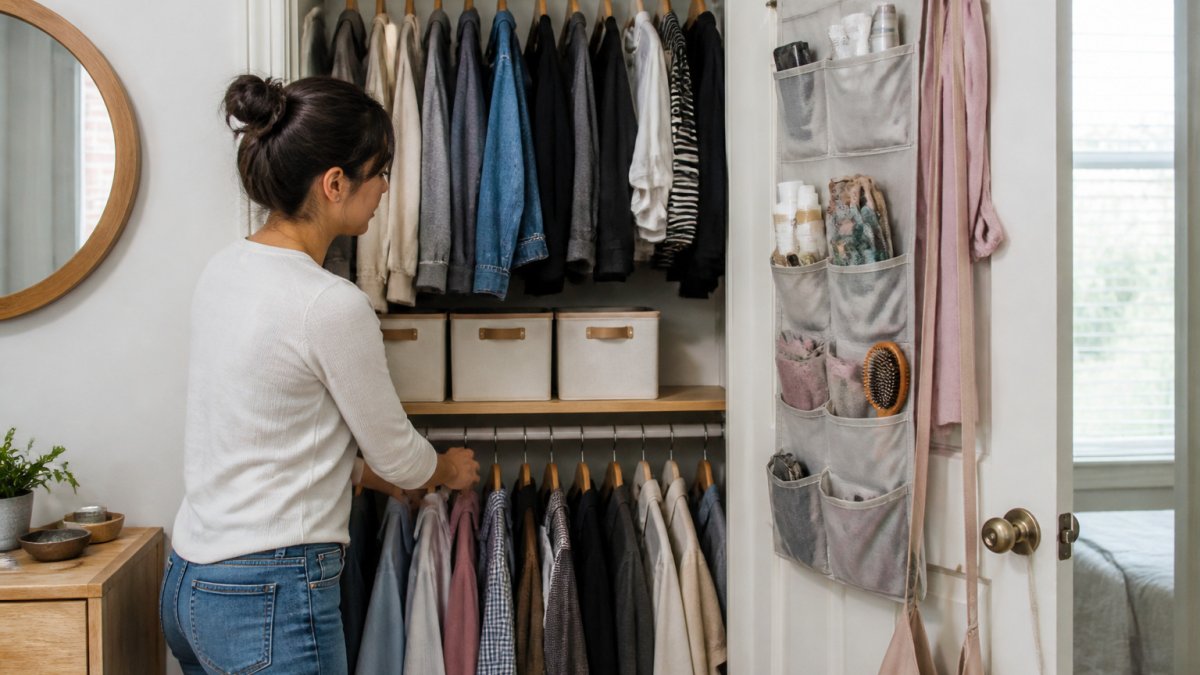
Install a short rail below the main rod for shirts and blouses. Stack labeled bins on the top shelf for off-season items.
Good vertical storage keeps the floor clear. Floor space fills up fast in a tiny closet, so lifting items up keeps the room usable and easy to walk into.
DIY Clothes Storage Ideas for Small Spaces
You do not need expensive systems to add storage. Many simple, low-cost ideas work well in a small apartment closet.
- Use tension rods to create extra hanging space inside a shelf
- Hang a fabric shelf from the door for sweaters
- Staple a few sturdy hooks to the side wall for bags and scarves
- Use shoe boxes with the ends cut out as drawers for small items
Keep DIY projects simple. Test each one with a light load before you trust it with heavy coats. Sturdy materials and secure mounting matter most.
How to Organize a Small Closet With Lots of Clothes and Shoes
When a closet holds a large amount of clothing and footwear, sorting by category keeps things findable. Group items by type first, then by color or length.
Place shoes on the lowest shelf or in a shoe rack on the floor. Keep the ones you wear daily near the front. Store rarely used pairs in boxes on a higher shelf.
Fold knit tops and stack them by color. Hang shirts and dresses by length so the eye can scan quickly. Use uniform hangers to keep the rail looking tidy and to save space.
Step-by-Step: Swap Seasonal Clothes Twice a Year
A repeatable seasonal rotation keeps your closet from overflowing and turns a dreaded chore into a predictable routine.
Before you start: clear a bed or floor space large enough to hold one season's worth of clothing.
- Pull out the outgoing season. Remove every item you will not need for the next few months. Do not cherry-pick; empty the rod and shelves of that season's clothes completely so you can see the full volume. This is the moment to notice duplicates and items you avoided wearing all season.
- Sort into keep, donate, repair, and store. Work item by item, not category by category, to avoid decision fatigue. Use the criteria from the edit section above: keep if worn often and fits well today; donate if unworn for a year or wrong size; repair if the fix takes an hour or less; store if seasonal and in good condition. Setting a timer for each category can help keep the sorting moving.
- Clean and check before storage. Wash or dry-clean every item going into storage, even if it looks clean. Body oils and stains can attract pests over time, so cleaning items before storage is a sensible precaution. Dry everything completely before packing it away. Check pockets, buttons, and seams now so repairs happen before storage, not after.
- Pack the off-season items. Fold heavy knits and stack them in breathable bins or cotton bags; hang structured items like coats and dresses in garment bags if space allows. Label each bin with the season and a short contents list (e.g., "Winter, sweaters, scarves, wool coats"). Store bins on the top shelf, under the bed, or in a suitcase, anywhere out of the daily reach zone.
- Bring out the new season. Unpack the incoming season's clothes and sort them by category (tops, bottoms, outerwear, shoes) before hanging. Group by length so the eye can scan quickly, and use uniform hangers to save space. Place daily-wear items at eye level and rarely used pieces on higher or lower shelves.
- Review fit and condition as you hang. Try on anything you are unsure about. Set aside items that no longer work for donation or repair. This second pass catches pieces that slipped through the first sort.
- Reset the closet zones. Return each category to its designated spot: hanging rail for shirts and dresses, folded stacks for knits, floor rack or low shelf for shoes, door organizer for accessories. Wipe down shelves and vacuum the closet floor before loading everything back, a clean start makes the system easier to maintain.
Watch out: Do not store clothes in sealed plastic bins if they are even slightly damp or if your apartment runs humid. Trapped moisture can encourage mildew and musty odors.
Label every bin with the season and contents, and keep a simple inventory note on your phone.
The seasonal swap works best as a repeatable workflow, so here is a quick summary of each step.
| Step | What to do | Time or frequency |
|---|---|---|
| 1. Pull out outgoing season | Empty rod and shelves of that season's clothes completely | Each swap |
| 2. Sort | Keep, donate, repair or store, item by item | Each swap |
| 3. Clean and check | Wash or dry-clean items before storage and dry fully | Before storage |
| 4. Pack off-season items | Use breathable bins or cotton bags and label each bin | Each swap |
| 5. Bring out new season | Sort by category, group by length, use uniform hangers | Each swap |
| 6. Review fit and condition | Try on unsure items and set aside pieces that no longer work | Each swap |
| 7. Reset closet zones | Return categories to their spots, then wipe shelves and vacuum floor | Each swap |
Prepare Clothes for Long-Term Storage and Protect Materials
Clothes stored for months need more than a quick fold and a bin. Dirt, moisture, pests, and improper hanging can damage fabric beyond repair.
Start with a clean, dry baseline. Wash or dry-clean every item before storage, even if it looks clean.
Match the storage method to the material:
- Wool and cashmere: Fold, do not hang, hanging stretches shoulders and distorts shape. Clean thoroughly, then store in breathable cotton bags or cardboard boxes with cedar blocks or lavender sachets. Avoid sealed plastic, which traps moisture and can cause yellowing. In humid conditions, a moisture absorber can help; check it periodically.
- Leather and suede: Brush off surface dirt and treat with a leather conditioner before storage. Hang on padded hangers in a breathable garment bag, never plastic, which can cause cracking and mildew. Store in a cool, dry spot away from direct heat or sunlight. In damp homes, keep leather items out of basements and closets against exterior walls.
- Knits (sweaters, cardigans): Fold and stack in breathable bins. Never hang knits, as the weight of the garment stretches the shoulders and hem. Wash gently and dry flat before storing. Add cedar or lavender to deter moths, and avoid overcrowding bins so air can circulate.
- Silk and delicates: Wash by hand or dry-clean, then store flat or rolled in a breathable bag. Keep away from direct sunlight, which can fade color.
- Outerwear and coats: Clean and dry thoroughly, then hang in breathable garment bags. Remove any detachable fur or faux-fur trim and store separately. Check pockets for crumbs or receipts that can attract pests.
Climate and humidity precautions: If your apartment runs humid (bathroom-adjacent closets, basements, or poorly ventilated spaces), moisture is your biggest enemy.
Pest protection: Moths and carpet beetles are the most common culprits.
Watch out: Mothballs are generally not recommended for small enclosed spaces. Cedar, lavender, and thorough cleaning are common alternatives.
Store delicate fabrics in a cool, dry spot away from direct sunlight.
Keep Your Rotation System Working All Year
A closet system only works if you maintain it. Spend ten minutes each month putting things back in place and checking for items that drifted into the wrong zone.
Keep your most-used items within easy reach. Move seasonal bins to the back when the season ends. Revisit your keep, donate and repair piles at each swap.
Small habits make a big difference in a small closet. Return each item to its spot after wearing it, and your closet will stay organized through every season.
Frequently Asked Questions
How do you organize clothes in a small apartment closet?
Start by emptying the closet and sorting clothes into keep, donate, repair and store piles. Hang items you wear often at waist height, put shoes and accessories on the floor or on a door organizer, and place out-of-season items in labeled bins on the top shelf. Group like with like, such as all tops together and all pants together, so you can find things without digging. Re-check the layout after a month and adjust anything you reach for constantly but cannot access easily.
How often should you rotate seasonal clothes?
Many people rotate seasonal clothes twice a year, at the change from winter to summer and again from summer to winter. Rotating at the start of each season gives you a natural point to edit the wardrobe, check items for damage and decide what to donate. If you live somewhere with mild weather, you may only need to rotate heavy coats and special-occasion pieces once a year. Pick two fixed dates on your calendar so the habit is easy to keep.
How can you organize a closet when you have no extra storage space?
Make the space you already have work harder. Add a tension rod or second hanging rail to double hanging capacity, hang a door organizer for shoes and accessories, and use stackable bins under the rail or on the top shelf. Store the most seasonal items, such as heavy coats, in vacuum-sealed bags or breathable garment bags under the bed or on a high shelf. Removing even a few unworn items each season frees up more room than any new organizer.
What is the best way to store out-of-season clothes in a small apartment?
Clean and fully dry each item before storage, since stains and body oils attract pests and yellow fabric over time. Fold knitwear and store it in breathable cotton or fabric bins rather than plastic, which can trap moisture. Hang structured coats and dresses in garment bags, and keep labeled bins on a high shelf or under the bed. Include a few cedar blocks or lavender sachets and check the bins every few months for dampness.
