


Table of Contents
- Why Luxury Reading Nook Furniture Is Not Required
- Budget Reading Nook Ideas by Corner Type
- Reading Nook Chair Alternatives That Still Feel Comfortable
- Reading Nook Lighting Ideas Without Expensive Fixtures
- Storage and Shelving: Where to Save and Where to Spend
- DIY Reading Nook on a Budget: A Step-by-Step Approach
- Setting Your Reading Nook Budget and Where to Start Shopping
- Frequently Asked Questions
Last Updated: November 1, 2026
Why Luxury Reading Nook Furniture Is Not Required
Most people assume a good reading nook furniture setup needs designer pieces. It does not. A reading corner feels cozy because of how it is arranged and how it is used, not because of what the chair cost. Compare styles and prices side by side in Urban Outfitters vs Target home decor to see what each store offers for a cozy corner.
The real goal is comfort you want to come back to. That comes from a supportive seat, good light, and a few soft textiles that make the spot feel like a retreat. None of those require a luxury price tag.
Here is the core idea to keep in mind as you shop:
- Comfort and style matter more than brand names
- A corner that works for you beats a showroom set
- You can build the look one piece at a time
A reading nook is also smaller than most rooms, so you may need fewer pieces.
Budget Reading Nook Ideas by Corner Type
The right budget setup depends on where your nook lives. A window, a bare wall, and an under-stairs gap each call for something different.
Window-side nook: Use the natural light. A simple bench with a cushion can serve as a window seat. Add a throw pillow or two for color.
Corner nook: Fill the empty angle with a compact armchair and a small side table. Keep the footprint tight so the space still feels open.
Under-stairs or alcove nook: Build in height with shelves. Stack books on open shelving and add a floor cushion for a low, informal seat.
A quick rule of thumb: start with one seat, one light source, and one storage piece. Add textiles last, since they are the easiest thing to swap as your taste changes.
Reading Nook Chair Alternatives That Still Feel Comfortable
A chair is the centerpiece, but it does not have to be a luxury armchair. The practical question is not which chair looks best, it is which seat fits your corner, your body, and your reading posture. Use the measurements and trade-offs below to choose before you shop.
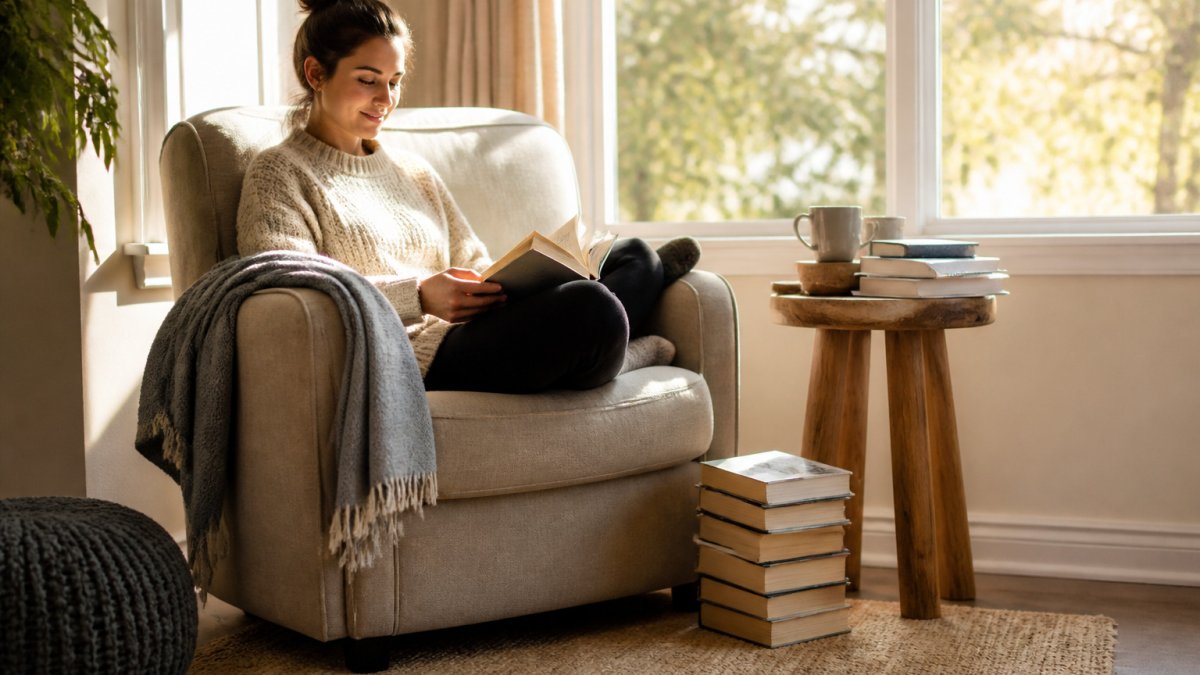
Start with your reading posture and body
- Upright reading needs back support and a seat height that lets your feet rest flat. A firm armchair or a cushioned bench with a back works best.
- Curled-up reading needs a low, soft surface. A dense floor cushion or a low chaise-style seat suits this better than a tall chair.
- Getting in and out: if you have knee, hip, or mobility concerns, favor a seat height that lets you push up without straining, commonly around 17-19 inches from floor to seat, and add a firm armrest. Very low floor seating is harder to rise from.
- Seat depth: a seat that is too deep forces you to perch forward; too shallow and your thighs take the load. Aim for a depth that lets your back reach the backrest with a small gap behind your knees.
Fit guidance for small corners
- Measure the footprint, not just the chair: note the chair's width and depth, then add clearance for the lamp and side table. A common pattern is to leave at least 24-30 inches of walking clearance in front of the seat so the nook does not block a doorway or hallway.
- Window-side nooks: a bench or window-seat cushion often fits where an armchair will not, because it uses depth along the wall rather than projecting into the room.
- Corner nooks: a compact armchair with a tight footprint plus a small side table usually works better than a wide recliner, which needs rear clearance to recline.
- Under-stairs or alcove nooks: measure the lowest headroom point first; a floor cushion or low bench is often the only seat that fits comfortably.
Floor cushions and bolster seating
Floor cushions are one of the cheapest ways to add a seat, and they work well in small spaces because they can be moved or stored. A firm bolster or large floor pillow gives you a back to lean against.
- Choose a dense filling so the cushion holds its shape rather than flattening.
- Pick a washable cover for easy care.
- Pair it with a low table or footstool for your drink and book.
- Floor seating suits short reading sessions best; for long sessions, add a back support or a wall cushion.
Secondhand and refurbished armchairs
A secondhand armchair can give you the structure of a real chair for much less. For more budget-friendly options to pricey furniture, see best alternatives to Nordstrom basics. Look for solid frames and sturdy joints, and avoid pieces with sagging seats or wobbly legs, since those are hard to fix.
- Check seat height and depth against the guidance above before buying.
- Test the frame by lifting one corner slightly, a frame that flexes or creaks is a warning sign.
- Refurbishing is often simpler than expected: a new cover or fresh cushions can change the whole look.
Benches and window seats as chair alternatives
A cushioned bench is often the most space-efficient seat for a window or wall nook. It doubles as storage if you choose one with a lift-up lid, and it lets two people share the spot. The trade-off is less back support, so pair it with pillows or a wall-mounted back cushion if you read for long stretches.
Reading Nook Lighting Ideas Without Expensive Fixtures
Good light is what makes a reading nook usable after dark. If you want a soft glow without a fixture, non-toxic candles for small spaces are a buying guide worth reading. A plug-in reading lamp or a floor lamp with a warm bulb often does the job.
Here are a few low-cost lighting ideas:
- Use a clip-on lamp on a bookshelf for focused light
- Place a floor lamp beside the chair, at shoulder height when seated
- Add a small table lamp on a side table for a soft glow
- Choose warm bulbs around 2700K for a relaxed feel
Natural light still matters most during the day. Position your seat near a window when you can. The soft daylight reduces eye strain and makes the nook feel bigger.
Storage and Shelving: Where to Save and Where to Spend
Storage is where you can save or overspend quickly. To plan seasonal layers for your shelves or nook, read seasonal decor for modern living rooms. A simple approach is to spend on the pieces you touch every day and save on the rest.
Where to save:
- Open shelves made from basic wood or metal
- Woven baskets for storing blankets and extra books
- Basic bookends and small decor pieces
Where to spend:
- A sturdy shelf that will hold a full load of books without bowing
- A supportive chair or cushion you use every day
- A lamp with good light quality
Measure your alcove before shopping. Know the width, height, and depth of the space so the shelf fits and does not crowd the seat.
DIY Reading Nook on a Budget: A Step-by-Step Approach
You can build a nook in an afternoon with basic tools and a modest budget. Follow these steps in order.
- Pick the corner. Choose a spot with good light or an unused alcove.
- Measure the space. Note the width, depth, and height so each piece fits.
- Set the seat. Place your chair or cushion first, since it anchors the layout.
- Add light. Position a lamp within easy reach of the seat.
- Install shelving. Mount a simple shelf at a comfortable reading height.
- Layer textiles. Add a blanket, throw pillows, and a rug to soften the space.
- Edit and adjust. Sit in the nook for a few minutes and move anything that feels in the way.
Take your time with step 7. Most nooks improve after a small round of adjustments.
Setting Your Reading Nook Budget and Where to Start Shopping
Pricing depends on the piece, material, and where you buy, so check current listings before you finalize a budget.
Item-level price ranges to plan around
- Seating: A new low-cost armchair typically runs roughly $150-$400; a secondhand or refurbished armchair often lands around $40-$150; a dense floor cushion or bolster usually costs about $30-$90; a simple upholstered bench or window-seat cushion commonly falls in the $60-$200 range.
- Lighting: A clip-on or small table lamp is often $15-$40; a basic floor lamp with a warm bulb usually runs $30-$80; a plug-in wall or shelf lamp commonly costs $20-$60.
- Storage: Open wood or metal shelving often runs $40-$120; woven baskets are typically $10-$35 each; basic bookends are usually $8-$25.
- Textiles: Throw pillows commonly cost $10-$30 each; a throw blanket is often $20-$50; a small rug usually runs $30-$100.
- Side table: A small side table or repurposed stool often costs $20-$80.
Three sample total budgets
- Low-cost setup (roughly $150-$300 total): secondhand armchair or floor cushion, clip-on or small table lamp, one basket, two throw pillows, and a blanket you already own.
- Mid-range setup (roughly $300-$600 total): new budget armchair or cushioned bench, floor lamp, open shelving unit, small side table, and a rug.
- Higher-cost but still non-luxury setup (roughly $600-$1,000 total): sturdier armchair, quality floor lamp, solid shelving, side table, and a full layer of textiles.
Where to save and where to spend
- Spend on: the seat structure (frame, joints, cushion density), the light source (bulb quality and adjustability), and any shelf that will carry a full load of books.
- Save on: decorative pillows, baskets, bookends, rugs, and small accents, these are easy to swap and easy to find secondhand.
- Repurpose first: a stool as a side table, a dresser as a shelf base, or a blanket as a seat cover can remove entire line items from your budget.
Shopping tips for planning your budget:
- Compare the same item across several sellers before buying.
- Check secondhand listings regularly.
- Buy textiles in neutral colors so one purchase works across future rearrangements.
- Time lamp and décor purchases around seasonal sales.
Pricing depends on the piece, the material, and where you buy. For current prices, visit S&Y company's website, and explore its home decor collection to see what suits your space.
Here is a quick reference for the price ranges and total budgets covered above.
| Setup | Approximate total | What it includes |
|---|---|---|
| Low-cost | $150-$300 | Secondhand armchair or floor cushion, small lamp, one basket, two pillows |
| Mid-range | $300-$600 | Budget armchair or cushioned bench, floor lamp, open shelving, side table, rug |
| Higher-cost, non-luxury | $600-$1,000 | Sturdier armchair, quality floor lamp, solid shelving, side table, full textiles |
Frequently Asked Questions
How can I create a cozy reading nook on a budget?
Start with a corner you already have and choose only the pieces that matter most: a comfortable seat, one reading light and a few textiles. Cushions, throws and a secondhand lamp add warmth for little money. Clearing clutter and arranging existing books on a shelf often changes the feel of a space more than buying new furniture. Build the rest over time as your budget allows, rather than buying everything at once.
What is a good affordable alternative to a luxury reading chair?
A firm, well-padded armchair from a secondhand shop or a bolster-and-cushion setup on a floor base can be as comfortable as a designer chair. Look for seat depth and back support when you test options, since these decide comfort more than brand or price. A chaise or daybed with extra cushions also works well in narrow spaces and suits longer reading sessions.
What lighting works best in a reading nook?
A reading nook needs focused light at the level of the page, so a floor lamp or wall-mounted reading lamp placed behind or beside the seat works best. Choose a warm bulb around 2700K for comfortable reading in the evening. Keep the light source out of your line of sight so it does not glare on the page. Natural light from a nearby window is ideal during the day.
Where can I find affordable reading nook furniture?
Secondhand marketplaces, thrift stores and local classifieds often carry solid armchairs and side tables at a fraction of new prices. Check dimensions before buying, measuring the corner and the doorways you need to pass through. Pricing depends on condition, size and delivery, so compare current listings and check each seller's return or pickup terms before you commit.
