


Last Updated: November 12, 2026
Quick Summary
To store delicate knitwear without stretching, fold it flat rather than hanging it, since hanging pulls fabric down at the shoulders over time. Keep sweaters in short stacks, store each fiber type separately, and use breathable containers instead of sealed bags.
- Fold fine knits, cashmere, merino and loose-gauge sweaters instead of hanging them.
- Never hang thin knits or pieces with a wide, soft neckline.
- Avoid wire hangers, which create shoulder bumps and stretch the knit within weeks.
- Stack wool sweaters no more than three high, with the heaviest piece at the bottom.
- Wash and fully dry wool before storing it, since trapped moisture causes mildew.
Table of Contents
- Why Delicate Knitwear Stretches in Storage
- Folding vs Hanging Sweaters: Which Protects the Knit
- How to Fold Sweaters for Storage Without Distorting Shoulders
- Storing Delicate and Heavy Knits Individually
- Sweater Storage Ideas for Small Spaces
- How to Store Wool Sweaters Long Term
- Booking Your Next Loungewear and Knitwear Pieces at S&Y
- Frequently Asked Questions
Why Delicate Knitwear Stretches in Storage
Delicate knitwear is one of the easiest garments to ruin in the closet. Shop soft, breathable lounge pieces to see how light, fine-knit fabric feels before you store it. Stretching usually happens for one simple reason: the weight of the garment pulls on the fabric for weeks or months. Fine knits and loose stitches give way first. Keeping how to store delicate knitwear without stretching in mind from the start saves you from wearing a sweater that has lost its shape.

Stretching does not happen all at once. A sweater hung on a thin hanger slowly sags at the shoulders, and the neckline widens over time. Heavy knits can also stretch under their own weight when stacked too high. Light, fine-gauge pieces are more fragile, but even thick wool can lose shape if it is handled carelessly.
- Hanging by the shoulders pulls fabric downward over time
- Stacking heavy knits compresses the bottom layers
- Tight storage can crease and distort the rib at the cuffs and hem
- Damp or unclean garments set stains and attract pests
Folding vs Hanging Sweaters: Which Protects the Knit
For most knitwear, folding protects the shape better than hanging. A folded sweater rests flat, so its weight spreads across the whole body instead of pulling on two small points at the shoulders. Hanging works for sturdy structured pieces, but it is the wrong choice for most delicate knits.
Use these guidelines to decide:
- Fold: fine knits, cashmere, merino, loose-gauge sweaters, and anything with a heavy or stretchy weave
- Hang: only structured knit jackets or cardigans with a firm body that will hold a shape
- Never hang: thin knits or anything with a wide, soft neckline
A common mistake is hanging a sweater on a wire hanger because it saves space. Wire hangers create bumps at the shoulders and can stretch the knit out of shape within weeks. Choose a wide, padded hanger if you must hang a piece at all.
The table below compares the two main storage methods and when each one suits a knit.
| Method | Best for | Key difference |
|---|---|---|
| Fold | Fine knits, cashmere, merino, loose-gauge sweaters | Weight spreads across the whole body |
| Hang | Structured knit jackets or cardigans with a firm body | Only for pieces that hold a shape |
| Never hang | Thin knits, wide soft necklines | Pulls fabric down at the shoulders |
| Wire hanger | None recommended | Creates shoulder bumps and stretches the knit |
How to Fold Sweaters for Storage Without Distorting Shoulders
Folding the right way keeps the shoulders and neckline from stretching. Follow these steps for a clean, shape-friendly fold:
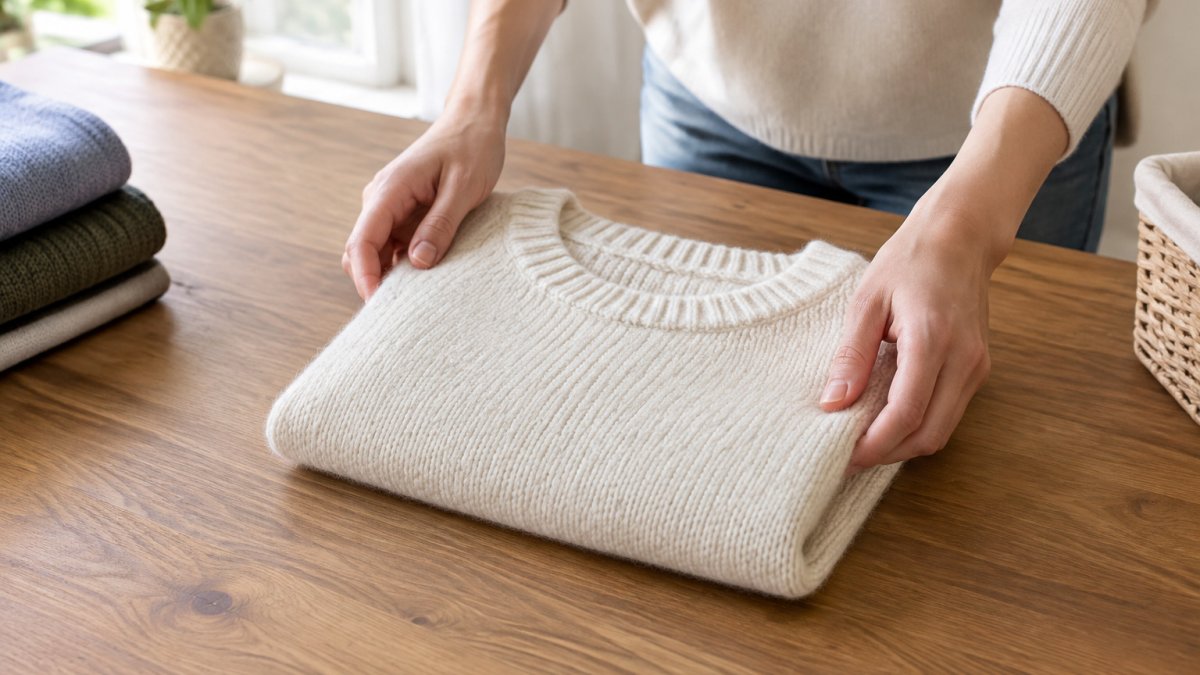
- Lay the sweater flat on a clean, dry table, face up.
- Smooth out any wrinkles with your hands. Do not pull the fabric.
- Fold one sleeve inward toward the center of the body, keeping the shoulder seam flat.
- Fold the other sleeve over the first one, so both sleeves lie behind the body.
- Fold the sweater in half lengthwise or in thirds, depending on its size.
- Fold the bottom hem up to meet the shoulders, so the piece forms a neat rectangle.
Keep the shoulder seams flat throughout. Never drag or stretch the sleeves while folding. Store the folded sweater flat, not standing on its edge.
Storing Delicate and Heavy Knits Individually
Not all delicate knits fail the same way. A cashmere crewneck, a cotton cable sweater, and a loose-gauge acrylic blend have different weights, airflow needs, and pest vulnerabilities, so storing them all in one stack invites the exact stretching and distortion you are trying to prevent. Sort by fiber first, then by weight, and store each group on its own shelf or in its own bin.
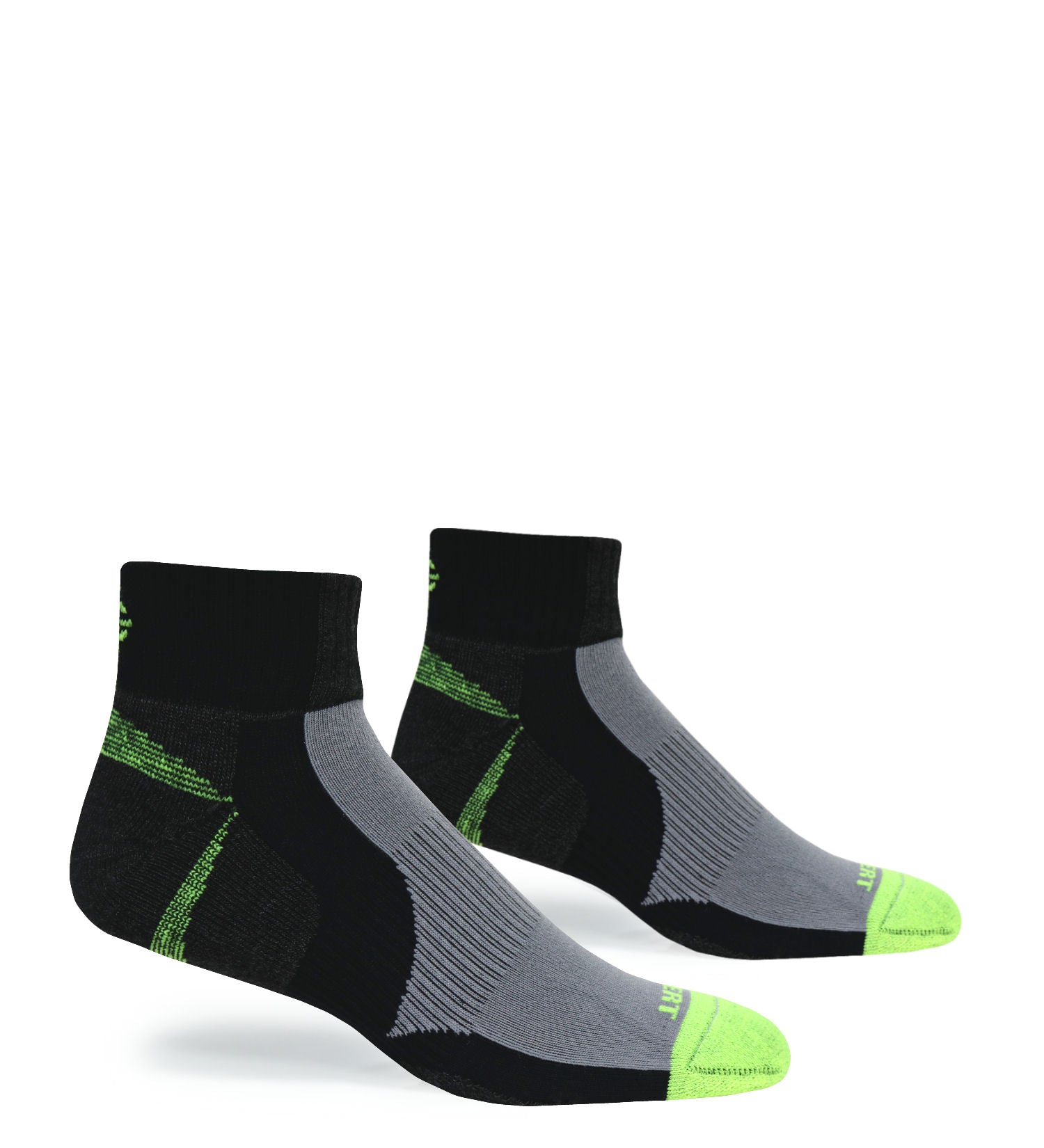
Wool and merino. Wool is heavy relative to its bulk and holds moisture, which makes it the most likely fiber to stretch under stacking pressure and the most attractive to moths. Browse merino wool athletic socks to see how this fiber performs in everyday wear. Store wool sweaters in stacks of no more than three, with the heaviest at the bottom, and keep them in a breathable cotton bag or a ventilated bin rather than a sealed vacuum bag. Wool needs airflow to avoid mildew; trapping it damp is worse than leaving it exposed.
Cashmere.
Cotton knits. Cotton is denser and heavier than wool, so it stretches more under its own weight when hung and compresses more when stacked. Store cotton knits in short stacks and rotate the bottom piece to the top every few months so no single garment bears the load. Cotton also absorbs moisture readily, so make sure it is bone dry before folding; a faintly damp cotton knit can develop mildew inside a closed drawer.
Synthetic knits. Acrylic, polyester, and blended knits are lighter and less prone to pest damage, but they pill and can develop permanent creases under pressure. They tolerate tighter stacking than wool or cashmere, but keep them away from direct heat, which can set wrinkles and distort the fiber. Synthetics also generate static, so a breathable storage bag is preferable to sealed plastic.
Embellished, loosely knit, and oversized pieces. Beaded, sequined, or loosely knit sweaters should be stored flat and alone, wrapped in tissue so the embellishments do not catch on neighboring garments. Oversized and heavy cable knits belong in their own drawer or on a bottom shelf, never on top of a stack where their weight presses down on finer pieces. If a piece is unusually heavy, consider rolling it loosely rather than folding, which distributes weight more evenly and avoids a hard crease line.
Watch out: stacking a heavy wool cable knit on top of fine cashmere is the most common cause of crushed, stretched shoulders in home storage, and the damage often does not show until the garment is unpacked.
Label each bin or shelf by fiber type so the whole household stores pieces consistently, and revisit the sorting whenever you add a new sweater to the collection.
Sweater Storage Ideas for Small Spaces
Small closets and drawers make it harder to store knitwear well, but a few simple changes help. Read how to organize a small apartment closet for seasonal clothes for more space-saving guidance. Vertical folding, where you stand folded sweaters on their edge in a drawer, saves room and lets you see every piece at a glance. Just be sure the drawer is not overfilled, since crushed knits lose their shape.
Other space-saving ideas include:
- Breathable under-bed storage boxes for off-season pieces
- Over-the-door shoe organizers for lightweight knits
- Shelf risers that create two levels on a single shelf
Avoid cramming. A drawer packed to the top forces knits to stretch and wrinkle. If you cannot close the drawer easily, remove a few pieces.
How to Store Wool Sweaters Long Term
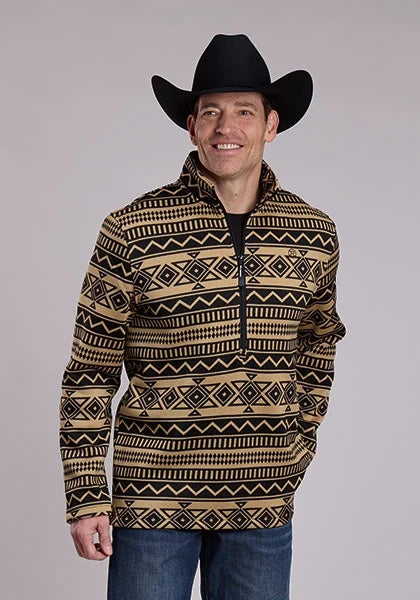
Long-term storage of wool sweaters benefits from careful preparation before packing. Explore a knit quarter-zip sweater to compare the fabric and fit you are protecting. Clean, dry, inspect, and protect each garment before storing it. Follow a step-by-step guide to washing delicate loungewear safely before it goes into storage.
1. Clean before you pack, not after. Body oils, sweat, and invisible food residue attract moths and set yellow stains over months. Wash or dry-clean every wool sweater according to its care label before it goes into storage, even if it looks clean. Clean, dry knitwear is less likely to pick up odors or stains in storage, and Coordinates can help keep family loungewear organized without crowding delicate sweaters.
2. Dry completely, then dry again. Wool holds moisture deep in the fiber, and a sweater that feels dry to the touch can still be damp at the seams and ribbing. Lay it flat on a drying rack away from direct heat for at least 24 hours after washing, then let it rest another few hours before folding. Mildew and musty odors come from packing wool that was slightly damp, and the smell is difficult to remove once it sets.
3. Inspect for damage and pests. Hold the sweater up to a light and check the underarms, cuffs, hem, and any folded edges for small holes, thinning, or live larvae. Brush the seams and ribbing with a soft clothes brush. If you find a hole, mend it before storage; a small hole becomes a large one after a season of pressure in a bin.
4. Choose the right container. Breathable storage is preferable to sealed plastic for wool. A cotton storage bag, a canvas bin, or a lidded plastic bin with ventilation holes allows air to circulate and lets moisture escape. Sealed vacuum bags compress wool fibers and can leave permanent creases along fold lines, and any residual moisture trapped inside becomes mildew.
5. Control the storage environment. Store wool in a cool, dry place away from direct sunlight, damp basements, and hot attics. Aim for a stable room with low humidity; a dehumidifier or a moisture absorber in the storage area helps in humid climates. Avoid storing wool against exterior walls, which can wick dampness into the fabric.
6. Deter pests without overdoing it. Do not place sachets directly against the wool; wrap them in tissue or place them at the corners of the bin so the oils do not stain the fiber.
7. Check and air periodically. Every two to three months, open the bins, air the sweaters for an hour in a dry room, and check for holes, musty smells, or pest activity. Refold along slightly different lines each time so the same crease does not set permanently into the fiber.
8. Recover before wearing. When you unpack a wool sweater, do not pull it into shape immediately. Let it rest flat for a few hours so the fibers relax, then gently reshape the shoulders and neckline by hand. Light steam from a handheld steamer held a few inches away removes storage creases without wetting the wool; never iron a wool knit directly, as the weight and heat will flatten the stitch definition.
Watch out: storing wool in a sealed plastic bin in a humid room is the single most common cause of musty, mildew-damaged sweaters, and the smell often cannot be fully removed once the fibers have absorbed it.
Booking Your Next Loungewear and Knitwear Pieces at S&Y
Once you know how to store delicate knitwear without stretching, the next step is choosing pieces that are worth protecting. S&Y company offers a curated selection of everyday essentials designed to help you feel comfortable, confident, and cared for. Browse our collection to find pieces that suit relaxing at home and everyday wear. Add to cart when you find a favorite, then store it using the methods above to keep its shape for seasons to come.
Frequently Asked Questions
Should delicate knitwear be folded or hung?
Fold most delicate knitwear. Hanging a knit by its shoulders over time pulls the fabric downward, which stretches the shoulders and distorts the neckline, especially with heavier wool or cashmere. Folding and storing flat keeps the garment's shape. Lightweight structured pieces like blazers or cardigans with heavy buttons can be hung on padded hangers if space requires it, but most sweaters should be laid flat in a drawer or on a shelf.
How do you store wool sweaters long term?
Clean the sweater before storing, since body oils and food stains attract moths and can yellow over time. Dry it fully, fold it loosely, and place it in a breathable container. Avoid sealed plastic bags for wool, because trapped moisture can encourage mildew. Store the container in a cool, dry, dark place and check it every few months.
What is the best way to store sweaters in a small closet?
Use shelves rather than hanging, and stack folded sweaters by weight, with the heaviest at the bottom. Drawer dividers or shelf organizers keep stacks from toppling.
Should knitwear be washed before storage?
Yes, when the garment is safe to wash. Dirt, perspiration and oils left in the fibres can attract pests and cause discolouration over months. Follow the care label, wash on a gentle cycle in a mesh bag or hand-wash, reshape while damp, and dry flat away from direct heat. Make sure the piece is completely dry before folding it into storage.
